Repairs That Keep Your Truck Running Strong
Ford repair services in Fayetteville for vehicles experiencing mechanical issues, routine maintenance needs, or performance concerns
Wiggs Auto Center provides Ford repair services in Fayetteville for owners dealing with check engine lights, transmission problems, brake wear, suspension noise, and routine maintenance schedules. Whether your F-150 requires differential service, your Escape needs timing belt replacement, or your Explorer shows signs of cooling system failure, the repair approach depends on accurate diagnosis and manufacturer specifications. Ford vehicles use specific torque settings, fluid requirements, and component tolerances that determine how repairs are performed and how long systems continue to function afterward.
Ford repair services address everything from oil changes and brake pad replacement to engine diagnostics, transmission rebuilds, electrical troubleshooting, and suspension overhauls. The work involves identifying which components have exceeded wear limits, determining whether parts require adjustment or replacement, and applying Ford-specific procedures that account for model year differences and drivetrain configurations.
Schedule a diagnostic evaluation to identify the specific repairs your Ford requires based on mileage and current condition.

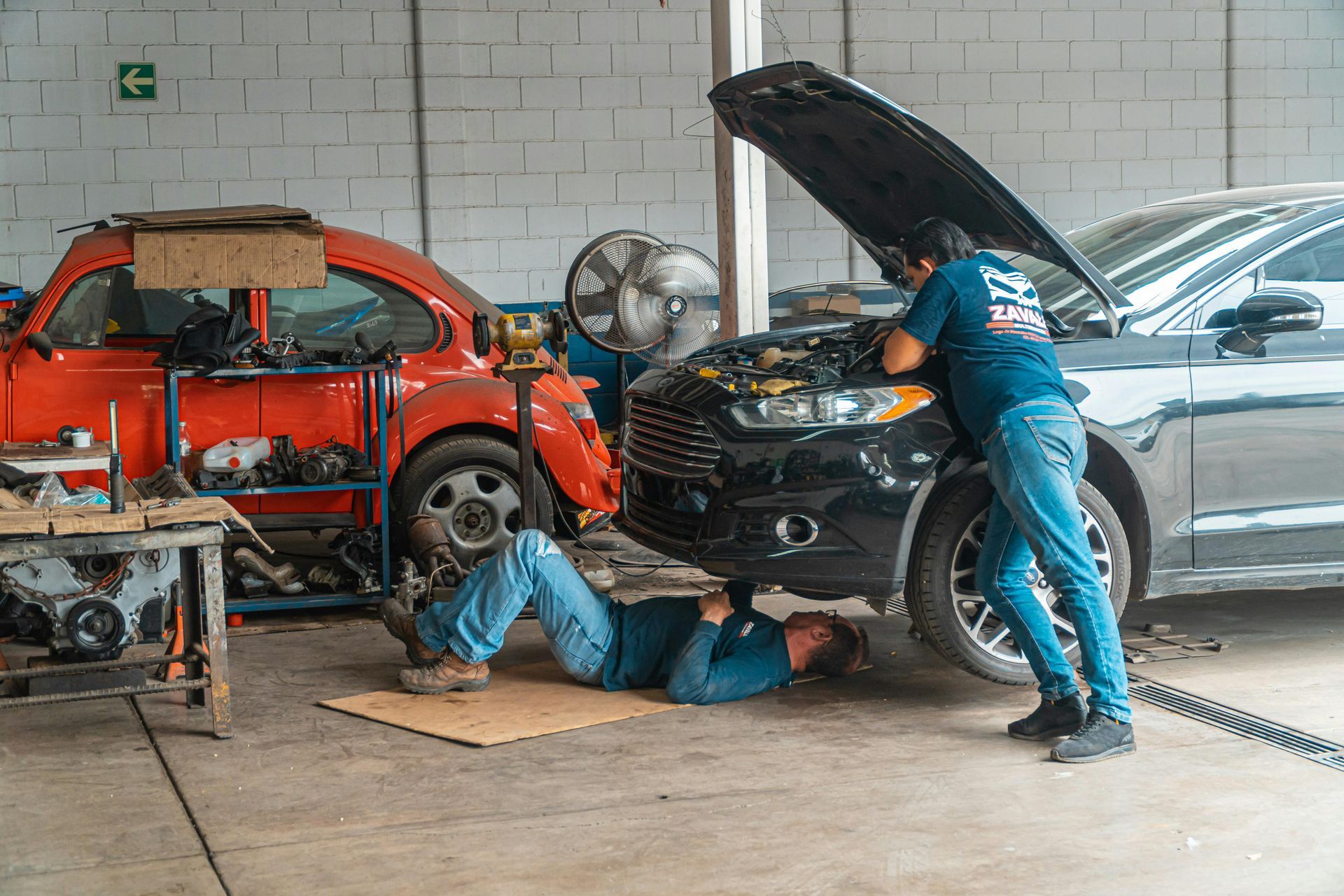
Ford models rely on specific diagnostic protocols that retrieve trouble codes, track sensor data, and monitor system performance in real time. Technicians use scan tools calibrated for Ford's OBD-II systems to identify misfires, emissions failures, fuel delivery issues, and electronic control module faults that don't always trigger dashboard warnings immediately. The diagnostic process determines whether problems stem from failed sensors, wiring issues, mechanical wear, or software calibration errors.
After repairs are completed, you'll notice that warning lights clear, engines idle smoothly without hesitation, transmissions shift through gears without delay or harsh engagement, brakes respond consistently without pedal fade, and steering operates without pulling or vibration. Wiggs Auto Center follows Ford maintenance intervals for fluid changes, filter replacements, and component inspections that prevent accelerated wear on engines, transmissions, differentials, and brake systems.
Repair scope varies depending on whether your Ford operates primarily in city traffic, highway commuting, towing applications, or off-road conditions. High-mileage trucks require more frequent inspections of suspension bushings, steering linkages, and drivetrain components compared to sedans used for daily commuting.
What Proper Ford Service Requires
Common Questions About This Service
Ford owners in Fayetteville often ask about repair timelines, maintenance schedules, and what different warning indicators mean for their specific model year and trim level.
- What types of Ford repairs are most common in Fayetteville? Brake system service, battery and alternator replacement, cooling system repairs, and transmission fluid exchanges appear frequently due to stop-and-go traffic patterns and summer heat cycles that accelerate fluid degradation and component wear.
- How does the repair process start for a Ford with multiple warning lights? Technicians begin with a full system scan to retrieve all stored trouble codes, then prioritize diagnostics based on which failures affect drivability, emissions compliance, or safety systems before addressing secondary concerns.
- What should I expect during a Ford transmission service? The process includes draining old fluid, removing the pan to inspect for metal shavings or clutch material, replacing the filter, cleaning magnetic plugs, reinstalling components with new gaskets, and refilling with Ford-specified ATF to manufacturer levels.
- When should suspension components be inspected on a Ford truck? Inspection intervals depend on payload use and road conditions, but ball joints, tie rod ends, and control arm bushings typically require evaluation every 30,000 miles or when you notice uneven tire wear, clunking sounds over bumps, or steering wander.
- Why do Ford engines require specific oil types? Ford's EcoBoost and naturally aspirated engines specify viscosity grades and additive packages designed for particular operating temperatures, turbocharger lubrication needs, and emissions system compatibility that affect engine longevity and fuel economy.
Wiggs Auto Center addresses Ford repair needs with diagnostic equipment designed for manufacturer systems and technicians familiar with model-specific service requirements. Request a service appointment to review maintenance history and current vehicle condition.